Supreme Court judge Tkachuk, whose resignation was halted, complains of interference
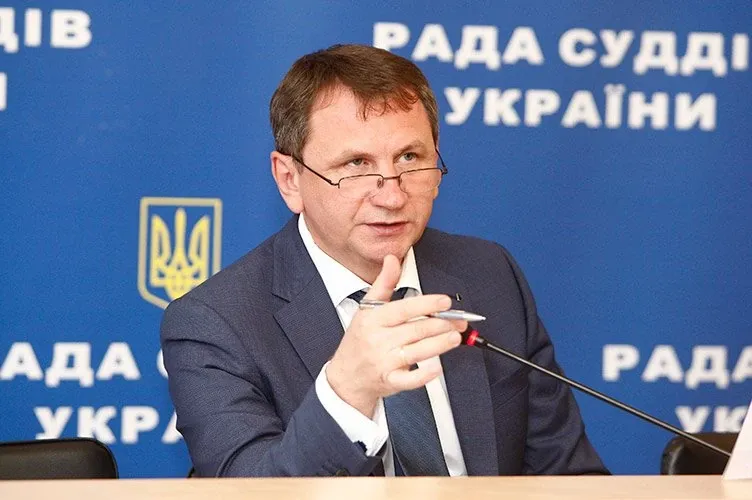
Oleh Tkachuk, a judge of the Grand Chamber of the Supreme Court, has filed a statement with the High Council of Justice about interference in his work. The HCJ earlier suspended his resignation because of disciplinary complaints, and according to lawyer Rostyslav Kravets, the statement has already served as grounds for 9 recusals in Tkachuk's cases.
Oleh Tkachuk, a judge of the Grand Chamber of the Supreme Court whom the High Council of Justice did not let retire quietly, has himself complained to the HCJ about interference in his work, reports the Office for Cleansing the Judicial System. The channel, which has long sought the judge's dismissal, sees this as an attempt to pass off complaints from lawyers and the public as pressure on the court. So it is worth sorting out what is known from documents and what only from the participants' words.
Resignation on pause
On 15 October 2026, the HCJ suspended consideration of Tkachuk's resignation request. The judge wanted to leave on honorary retirement, which provides a lifelong state allowance. However, the Council already had two disciplinary complaints against him by then: one from Mariia Zhylka (incoming no. Ж-1454/17/7-26) and one from lawyer Rostyslav Kravets (incoming no. K-6228/4/7-26). So Tkachuk will first have to answer in the disciplinary proceedings, and only then think about a pension. The complaints, the channel notes, are linked to the case of former Supreme Court head Vsevolod Knyazyev, in which Tkachuk's name came up.
Interestingly, these two complaints were joined to another, filed earlier by Nadiia Rohalska (incoming no. Р-4177/0/7-26) concerning all the judges of the Grand Chamber. Yet consideration of the resignation was suspended precisely because of the complaints from Zhylka and Kravets, while Rohalska's complaint was not mentioned in the HCJ's decision. The channel explains this selectivity simply: allegedly, the Council reads its posts, and it wrote precisely about these two complaints.
The shadow of the Knyazyev case
Vsevolod Knyazyev, then head of the Supreme Court, was detained by NABU and SAP in May 2023 in a bribery case. At that time Tkachuk stated that there were not enough facts for a vote of no confidence in Knyazyev, and that the search records were unclear to him. Meanwhile the case has not gone away: in May 2026, NABU and SAP came with searches again to the Supreme Court and to its former head.
According to the Office for Cleansing, Knyazyev gave testimony against Tkachuk about systematically taking bribes in the Grand Chamber, after which NABU searched the judge's car and house. There are no official reports in the sources about these searches or about a suspicion against Tkachuk. So for now this is the channel's version, not the position of the investigation.
The statement about interference
Tkachuk filed the statement about interference on 23 October 2026, and it appeared on the HCJ website only after Kravets appealed to the Council. The lawyer himself said so. According to him, it was this statement that served as grounds for the Grand Chamber to grant 9 recusals of Tkachuk in cases in which Kravets represents the parties. That is, the judge no longer takes part in those cases.
Kravets drew attention to one more detail of the statement: it mentions eavesdropping devices in the judge's phone. The lawyer suggests that, given the technical capabilities and jurisdiction, only NABU could have carried out such work. In addition, Kravets claims that Tkachuk misled him and his colleagues in the Grand Chamber. Disclosing the circumstances at the hearing, the judge allegedly said he had filed a crime report against the lawyer, although, according to Kravets, there was no such report. The lawyer also recalls another story: after Knyazyev's detention, a dissenting opinion by Tkachuk appeared, which, in Knyazyev's own words, they wrote together.
Who is pressuring whom
So a strange picture emerges. A judge who is the subject of complaints in connection with a corruption case in the Supreme Court writes a statement about interference in his work. Then this statement is used for recusals in the cases of the lawyer who complained about him. The channel puts it more sharply: it turns out as if a disciplinary complaint to the HCJ is itself the very interference from which the judge must be protected by the standards of independence.
How this ends will be decided by the HCJ. Until the Council considers the complaints from Zhylka and Kravets, Tkachuk cannot retire, and therefore continues to receive his judicial salary and make decisions in the Grand Chamber. That is why the complainants and the channel demand that they be considered as soon as possible: the longer the pause lasts, the more the budget pays a judge who himself wanted to leave.