Ex-deputy blames Minister Kalashnyk for failed Kyiv region substation defence
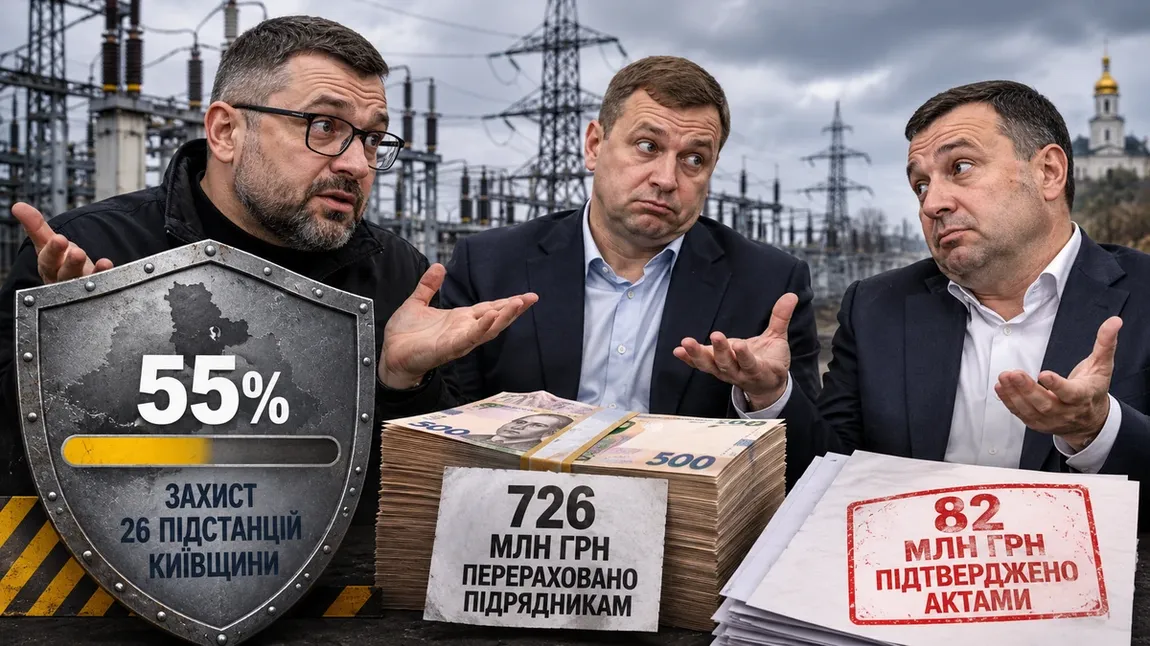
In November, the protection of 26 energy substations in the Kyiv region is only 55% complete, and of the more than UAH 726 million transferred to contractors, only UAH 82 million is confirmed by completion certificates. Minister Mykola Kalashnyk, his former deputy Ruslan Oliinyk and the businessman Vladyslav Sokolov are shifting responsibility onto one another.
The state wrote the protection of energy substations against Russian strikes into its resilience plans as one of the main tasks before winter. Under this plan, transformers at 26 substations in the Kyiv region were to be protected. As of 11 November, the average construction readiness of this protection stood at only 55%, according to sources in the regional leadership. That is, almost half of the work is not done, although the heating season is already under way. Contractors received hundreds of millions of hryvnias. A businessman claims the state owes him more than a billion. Energy workers complain that their warnings got lost. Meanwhile, three people who at different times were in charge of the region blame one another. So the question of this investigation is: who is responsible for the substations that in November still stand without protection, and where did the money go?
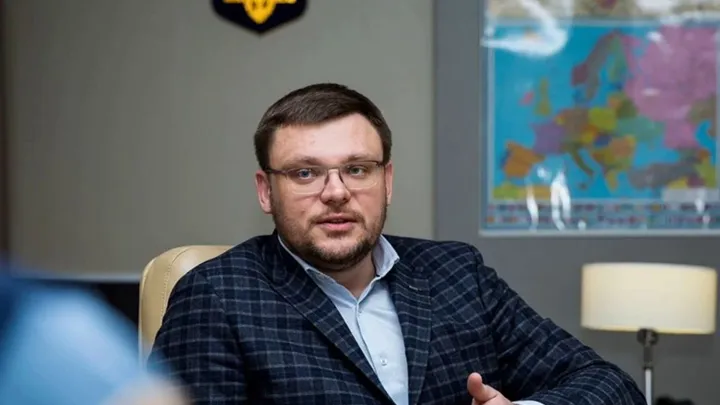
The central figure of this story is Mykola Kalashnyk. From 24 March 2025 he headed the Kyiv Regional State Administration, and before that he was first deputy head of it. The former head of the Kyiv regional military administration became minister for restoration, infrastructure and transport at the age of 36, after the Rada appointed new heads of the Ministry of Infrastructure on 16 July. On the same day the president dismissed Mykola Kalashnyk as head of the Kyiv regional state administration and temporarily entrusted his duties to Ruslan Oliinyk, who had previously been first deputy head of the regional military administration. Later the region got a new head. Tymur Tkachenko became head of the Kyiv regional military administration on 30 July 2026; before that he was head of the Kyiv City Military Administration from 31 December 2024 to 16 July 2026. Украинская правда +4
It is interesting how exactly Kalashnyk ended up in the minister's chair. According to sources in the regional leadership, the positive indicators of fulfilment of the Kyiv region's "resilience plans" became one of the arguments in favour of his appointment. Among the supporters of Kalashnyk's candidacy, the sources name Viktor Mykyta, deputy head of the Office of the President. However, after Kalashnyk moved to the government, the new regional leadership discovered that construction was lagging behind and that there were problems with financing. The minister himself later named a figure that casts doubt on those reports. "When I finished work as head of the Kyiv regional military administration on 16 July, the construction readiness of transformer protection at 26 substations was 40.02%," Kalashnyk said. It turns out that at the time of his appointment the protection was less than half ready. So which indicators were then considered successful, and who verified them? ceskenoviny
Kalashnyk's own version looks like this. According to him, contractors received UAH 911.4 million in prepayment, about $20 million at the NBU rate. From 16 July to 5 October, the readiness of the facilities grew from 40.02% to 46.75%, that is, by about 0.6 percentage points a week. Then, the minister says, the government intervened. On 30 September, reports of the State Service of Special Communications were considered at a separate meeting on the Kyiv region, and on 5 October the Coordination Centre chaired by the prime minister recorded in protocol No. 15 the risk of missed deadlines. After that, Kalashnyk claims, the ministry took the Kyiv region under separate coordination, and readiness grew by an average of 1.6 percentage points a week, although the work continues amid a shortage of funding. On 13 October the Kyiv regional military administration initiated the transfer of the facilities to the Recovery Agency for construction to continue, and that body will choose the contractor to complete the work. At the same time, the minister denied knowing the businessman Vladyslav Sokolov and shifted responsibility for the delay in protecting the substations onto his former deputy Ruslan Oliinyk and the current head of the Kyiv regional military administration Tymur Tkachenko. Publicly, Kalashnyk spoke of discrediting his work as head of the KOVA, and meanwhile the police are investigating whether the actions of the contractor that was to build the protection of the Kyiv region's energy facilities complied with the law. Facebook Pixel +2
The money figures in this story do not add up. Kalashnyk speaks of UAH 911.4 million in advances. Sources in the regional leadership name a different sum: more than UAH 726 million (about $16 million) transferred for construction. What matters more is something else. Of this money, only slightly more than UAH 82 million, about $1.8 million, is confirmed by completion certificates. A completion certificate is the document by which the customer accepts what has already been built. So the result is confirmed for only every ninth hryvnia out of the 726 million, and if we count from Kalashnyk's sum, even less. There is an everyday explanation: construction is not finished, and certificates are usually signed after stages are completed. Yet it is precisely such a gap between advances and accepted work that makes the region's new head wonder whether to keep paying.
This, according to the sources, is exactly what Kalashnyk asked of his successor. After moving to the government, he advised Tymur Tkachenko to keep paying the contractors so as not to stop construction. Tkachenko's team refused to take on the risks of new payments to companies that had disrupted the schedules. The reason is clear: the regional leadership had received warnings from law enforcement about possible investigative actions against the contractors. Imagine the position of an official whom his predecessor advises to send still more money to firms that investigators are already eyeing.
One of these contractors is the businessman Vladyslav Sokolov, and he tells a completely different story. Sokolov publicly accused Kalashnyk of the fact that since November 2025 contractors had been building protection for substations, cogeneration units and electronic warfare towers without advances and without contracts. They built, he says, on the official's "word of honour". The debt of the Kyiv regional military administration to his company, Sokolov claims, exceeds UAH 1 billion, that is, about $22 million. If the contractors really worked without advances, a simple question arises: who then received those UAH 911.4 million of prepayment that the minister reports on?
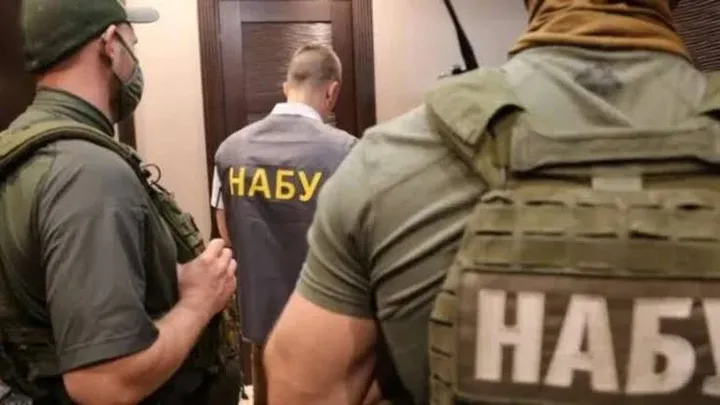
Sokolov also complains of pressure from the security forces. According to him, on 16 October the SSU searched him, and at a meeting at the ministry he was told to finish the work at his own expense by 15 November. It is known that in mid-October the police searched Sokolov's office in a case about a shelter for a lyceum in Kriukivshchyna, and also investigated the construction of the substation protection. After the searches, photos of a terrarium with a crocodile spread online, and the businessman began to be accused of a lavish lifestyle. Sokolov denies these accusations. He believes he is being made a "scapegoat" for the failures in the energy sector. epravda
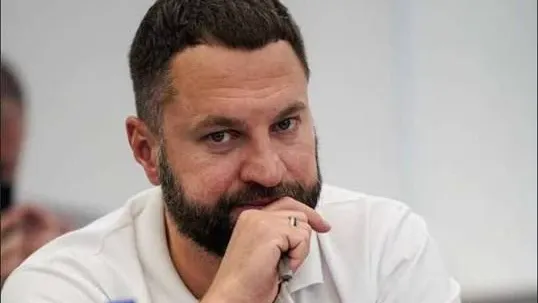
Sokolov responded most sharply to Kalashnyk's words that they are not acquainted and that the minister never assigned him contracts. "We have known each other since 2023, when he headed the Darnytskyi District State Administration. Back then I came to see him and offered rolled metal for the needs of the district's municipal enterprises, the administration of which he headed," the businessman said. Then, according to him, the cooperation did not work out. But in 2025 it was Kalashnyk himself who invited him to work in the Kyiv region. Next Sokolov speaks about what the official invoked. "In every conversation we had, Mr Kalashnyk spoke on behalf of the President. He referred to the fact that it was his direct instruction and that every issue was under his personal control. We, of course, trust the President. And all this time I thought I was carrying out the President's instruction. Now I understand perfectly well that this was not so," Sokolov said. He explains that he changed his mind after seeing a series of other actions by Kalashnyk toward other people and companies, in which the minister, according to him, looks like a person who does not keep his word. Kalashnyk himself, meanwhile, admits that he saw Sokolov at KOVA meetings. epravda
Kalashnyk's former deputy Ruslan Oliinyk confirms that the two men know each other, and with details. Oliinyk knew Sokolov from sport in Dnipro, where they once sparred, since Sokolov is also a boxer. But as a contractor, he says, Sokolov was introduced to him by Kalashnyk himself. Oliinyk denies that he recommended Sokolov to Kalashnyk: in his version, Kalashnyk called him into his office, where Sokolov was already sitting, and introduced them. How exactly the contractors for protecting the energy facilities were chosen, Oliinyk says, he does not know for certain. epravda
Oliinyk places all responsibility for the unfinished protection directly on Kalashnyk. He repeats Sokolov's version. The contractors, whose selection criteria remain unclear to this day, trusted Kalashnyk and President Zelensky, who personally set the task of fulfilling the resilience plans. That is why the companies sometimes began work without signed contracts and without proper financing, putting their own money into construction. Oliinyk clears Tymur Tkachenko of responsibility because, according to him, Tkachenko inherited the KOVA already bankrupt.
Oliinyk also says that after his dismissal from the KOVA, Kalashnyk forbade him any consultations on protecting facilities. "When I was leaving the military administration, I was given a clear order to stop any consultations, any working meetings on protecting critical infrastructure facilities," he recalls. According to him, Kalashnyk explained that the region already had a new head who knew what to do and would cope. Oliinyk objected that a great many processes had been launched, including with the military, with whom civilians sometimes find it hard to agree on security measures. "To which he answered me: 'Don't go there, I told you. From here on it's politics.' That's it, I obeyed my superior and stopped all communications and all consultations," Oliinyk says. It is interesting that in this episode the protection of substations before winter is suddenly called politics.
Among Kalashnyk's deputies in charge of the relevant areas at the regional military administration, Oliinyk names Nataliia Melnychuk, who later also followed him to the ministry. According to Oliinyk, she was the one responsible for construction in the region and dealt with the contractors who built the protective structures. However, even here he stresses that the head must bear responsibility for subordinates.
A separate line of this story concerns DTEK, the company that owns the Kyiv region's electricity networks. According to sources, DTEK warned three times the Kyiv regional military administration about problems with the construction of substation protection. The first two letters, interlocutors claim, were "lost". The third arrived after the region's leadership had already changed. The consequences of these "lost" letters are entirely material. Because construction work stopped, some of the disconnected transformers were not returned to operation. So as of August almost ten substations could not operate fully. Who exactly in the regional administration received these letters and did not pass them on is not yet known, although the answer should be in the incoming correspondence log.
Now the Reconstruction Agency has to finish the protection of the substations in Kyiv region, and its own work in the capital does not inspire optimism either. In an interview, the agency's head Ivan Fedorov admitted that none of the 6 backup boiler houses being built in the zone of the Darnytsia CHP plant has been put into operation yet. These boiler houses are needed because the Darnytsia CHP plant suffered critical damage in the enemy attack on 3 February. "This morning I toured three of the six sites we are building. A lot of work was started, a lot of details were missed. Now we are catching up, we are doing it, we will do it," Fedorov said. Asked whether the boiler houses have been launched, he answered that none has been put into operation because "it was impossible to put them into operation." Some of the sites, according to Fedorov, are at the final stage, but he gave no specific launch dates. By the end of 2026 the agency plans to provide backup heating for 80% of buildings in the Darnytsia CHP plant zone. So the body that was handed the unfinished substations of Kyiv region is itself admitting miscalculations at a neighbouring site. kyivcity
So what actually happened? The construction of protection at 26 substations began under Kalashnyk, and he himself says he is responsible for the decisions made then. When he left, the protection was 40% complete, and in November only 55%. The contractors were paid, but the work is confirmed by completion certificates for only a small part of the sum. Two participants in the events, a businessman and a former deputy, claim that work was started without contracts, and that Kalashnyk referred to an instruction from the president. The minister himself denies even knowing the contractor, although his former deputy describes how Kalashnyk introduced them in his office. All of this can be checked not by words but by documents: contracts, completion certificates, letters from DTEK and minutes of meetings. The police are already investigating the contractor's actions. Whether this story becomes a case about specific people or remains a dispute between three versions depends on whether investigators reach those who gave the contractors their "word of honour."
References:epravda.com.uat.methepage.ua