NABU cases against the top of the State Border Guard Service show it needs a reset
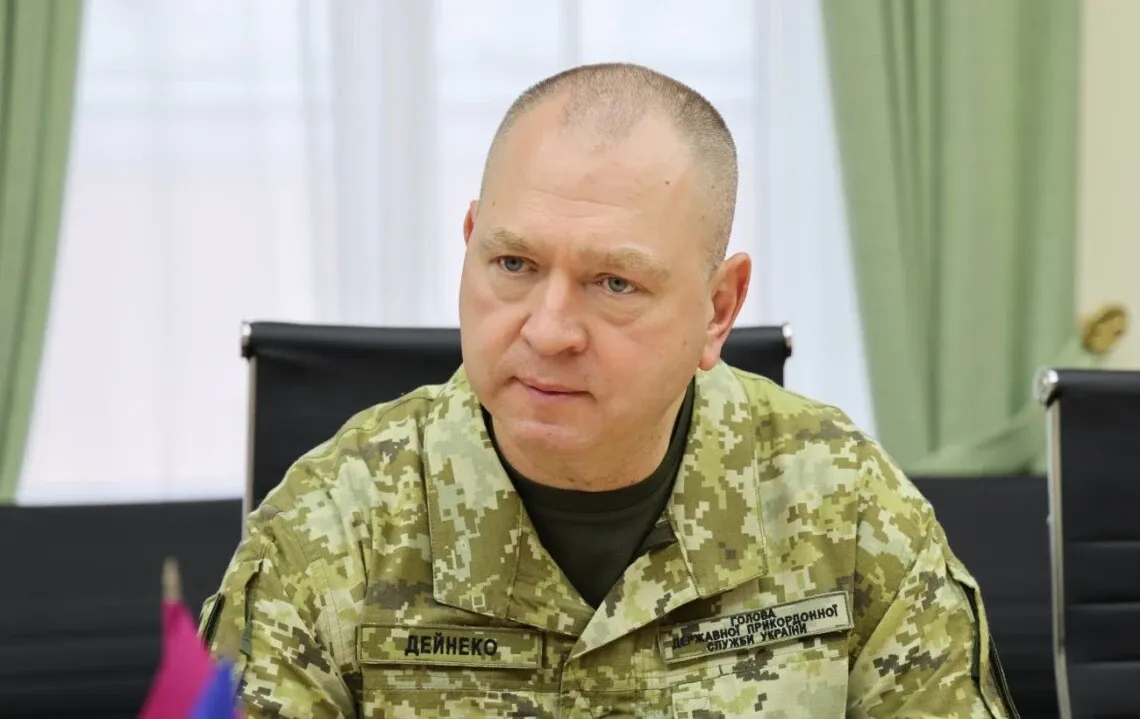
Former State Border Guard Service head Serhiy Deyneko is suspected of taking bribes for cigarette smuggling, a former deputy head of its western directorate of illicit enrichment, and an official of its administration of demanding $1 million in a drone tender. Meanwhile, the service is buying shells for the army worth billions through an intermediary.
While volunteers collect donations for drones hryvnia by hryvnia, the State Border Guard Service has received tens of billions from the Ministry of Defense for procurement for the army. At the same time, the anti-corruption bodies are opening case after case against its officials: from the service's former head to an official who prepared a tender for unmanned systems. This raises a question that deserves an honest answer. Did these people stumble individually, or has the service worked this way for years? We look for the answer in the facts that are already in the investigation's documents and in the agency's own statements.
Billions through an intermediary
The biggest story began in November 2024. Then UAH 23 billion from the Ministry of Defense budget, about $552 million, was transferred to the State Border Guard Service so that it could buy ammunition for the Armed Forces. The Defense Procurement Agency, which is responsible for this, did not receive the money. The border guards signed contracts with the Polish firm PHU Lechmar and paid it 100% in advance.
Serhiy Zghurets, director of Defense Express, noted at the time that Lechmar is merely an intermediary. According to him, the firm has 4 or 8 employees, and its only trump card is good relations with suppliers and with the SBGS. Full prepayment was supposed to guarantee fast deliveries, and fast, as Zghurets observed, always costs more. MP Yaroslav Zheleznyak later stated that over the whole of 2024, UAH 52 billion was sent to this firm. According to him, in February 2025 the Ministry of Defense once again delegated procurement to the border guards, this time for UAH 78 billion.
In spring 2025 the SBGS replied to Zheleznyak's inquiry, and that reply contained figures that were even more alarming. Lechmar's accounts payable to the service under the 2024 contracts stood at UAH 26.5 billion. In other words, that is how much money the border guards had already paid without receiving the goods for it. Of this amount, almost UAH 1.7 billion, or about $40.7 million, was for deliveries whose deadlines had already passed.
The service answered the criticism in the same way each time. SBGS spokesman Andriy Demchenko insisted that the overdue UAH 1.7 billion did not relate to the UAH 23 billion contract. In June 2026 he stated that all the ammunition under this contract had been delivered and handed over to the army, and that the price was one of the lowest. Later, NABU confirmed in writing, at Lechmar's own request, that it had not registered a criminal proceeding against the firm.
So no body has established a crime in this deal. Yet the question with which it all began remains unanswered. Why did the Ministry of Defense hand tens of billions for shells to a border service that worked with a single Polish intermediary and paid it everything in advance? Former Deputy Minister of Defense Ivan Havryliuk explained to the Rada's temporary investigative commission that the agency could not provide the required range of ammunition, so the powers were delegated to the border guards three times: in April 2024, December 2024 and February 2025. Society cannot verify prices in closed defense contracts. So every word from the agency about "one of the lowest prices" has to be taken on faith.
Bribes at the level of the service's head
The hardest question for the service was raised by the investigation into its former chief. Lieutenant General Serhiy Deyneko headed the SBGS from 2019. On January 2, 2026, the president announced that Deyneko was leaving his post, but did not give the reasons. On January 4 the general was dismissed and on the same day appointed adviser to the Minister of Internal Affairs. Eighteen days later NABU and the SAP notified him of suspicion.
According to the investigation, in 2023 a group of persons set up a channel for smuggling cigarettes into the EU, and the border service's top officials regularly took bribes for it. From July to November 2023, at least 68 vehicles crossed the border, at 3,000 euros for each, more than 204,000 euros in total. The cars had Czech and Austrian registration and plates resembling diplomatic ones. In the cabins rode relatives of Ukrainian diplomats in Europe with diplomatic passports, so European border guards and customs officers did not inspect them. Detectives established that the suspected SBGS officials had once served together with these diplomats.
Along with Deyneko, the head of a department at one of the checkpoints and another former official of the service received notices of suspicion. The HACC set bail of UAH 10 million for the former head, and on February 2 another man paid it for him. What happened next is hardly what an ordinary taxpayer would imagine. Deyneko was discharged from military service, and in March he was mobilized and appointed head of the Luhansk Border Detachment, which he had commanded back in the days of the ATO. An SBGS spokesman explained that the circumstances of the general's discharge do not legally prevent him from continuing to serve.
On July 16, 2026, NABU completed the investigation and opened the case materials to the defense. There is no verdict yet, so until the court rules, Deyneko is considered innocent.
The western directorate and drone tenders
The suspicions were not limited to the top. On July 10, 2026, NABU announced a notice of suspicion of illicit enrichment to a former deputy head of the SBGS Western Regional Directorate, who by that time already held the same post in the Eastern Directorate. According to the investigation, in 2023-2024 he acquired more than UAH 11 million whose lawful origin he has not confirmed in any way. Part of the money, the detectives believe, he spent on a Toyota RAV4, and the rest was found in cash during a search of his home.
The western directorate has had a similar story before. In 2022 NABU announced suspicion to its former head Volodymyr Yehorov and first deputy Ruslan Krasnoportko. According to the prosecution, in autumn 2016 the service signed an agreement for the construction in Uzhhorod of 5 apartment buildings for border guards. The officials signed the acceptance certificates and transferred to the contractor more than UAH 14 million for work that was not actually done and for materials that were not used. The HACC began hearing the case on the merits in March 2023, and no verdict in it has been publicly reported. So the money for housing for the border guards themselves, according to the investigation, also went to the wrong place.
The new case concerns procurement for the front. On May 29, 2026, NABU detained an official of the SBGS administration and the owner of a private company that makes drones. The investigation believes that the official wrote the conditions of a tender for 270 unmanned systems so that his accomplice would win. However, a competitor offered a lower price, UAH 760 million against 825 million, and won. Then, according to the investigation, the participants in the scheme demanded $1 million from the winner, that is 5-10% of the contract value, and received part of it, 50,000 USDT. Later the official was given an additional suspicion of laundering more than UAH 15.4 million in cryptocurrency from January to April 2026. Part of this money he, according to NABU, converted to cash and bought a Mercedes-Benz GLC 300, registered in his wife's name.
A border that opens for money
The second part of the problem concerns the crossing of the border itself. Since 2022, law enforcers have time and again exposed charitable foundations and public organizations that, for money, registered men of conscription age as "volunteers" and entered them into the "Shlyakh" system. In just one case, investigated by the Prosecutor General's Office in 2022, about 300 men left between February and September on the documents of a single foundation.
However, in November 2026 it was the border guards themselves who received notices of suspicion. SBU military counterintelligence together with NABU and the SAP established that in May-August 2022 a former official and two serving SBGS employees, for $5,000 per person, let men through to the unrecognized Transnistria outside checkpoints and without stamps in their passports. In total, according to the investigation, they received almost $50,000. Interestingly, this case had already been opened in 2022 and closed, and now they have returned to it with new facts.
In Zakarpattia, the ties between border commanders and local authorities are visible even in the courtroom. When the HACC was choosing a preventive measure for Serhiy Haidai, head of the Mukachevo District State Administration, who is suspected of buying drones and EW equipment for the army at inflated prices with kickbacks of up to 30%, among those willing to stand surety for him was the then head of the Mukachevo Border Detachment, Colonel Oleksandr Osypets. Surety is a lawful procedure, and there is no crime in it. But it shows that the commander of a border detachment publicly vouches for an official whom the investigation suspects of schemes in defense procurement.
The bottom line
So the SBGS's problem is much wider than individual inspectors at the barrier. The suspicions stretch from the service's former head to a regional directorate, a tender department and a checkpoint. The schemes, according to the investigation, repeat: money for letting cars through, wealth whose origin is not confirmed, cars registered in wives' names. When at the top billions for closed defense contracts go through an intermediary firm with a 100% prepayment, and the service's former head is suspected of bribes for a "green corridor" for smuggling, on the ground this is taken as permission to earn on every meter of the state border. This is exactly what mutual cover-up looks like.
Without a full reset of the detachments' leadership and the opening of the registers of non-military procurement, the system will keep working for its own pocket, not for the security of the state.
References:espreso.tvespreso.tvkurs.com.uaepravda.com.uayahoo.cominterfax.com.uatsn.uazaxid.netnews.liga.netkyivpost.com24tv.uasuspilne.medianabu.gov.uagalinfo.com.uaslovoidilo.uaslovoidilo.uaepravda.com.uasud.ualb.ua0312.ua