"Midas" case found no Energoatom losses but changed who runs the energy sector
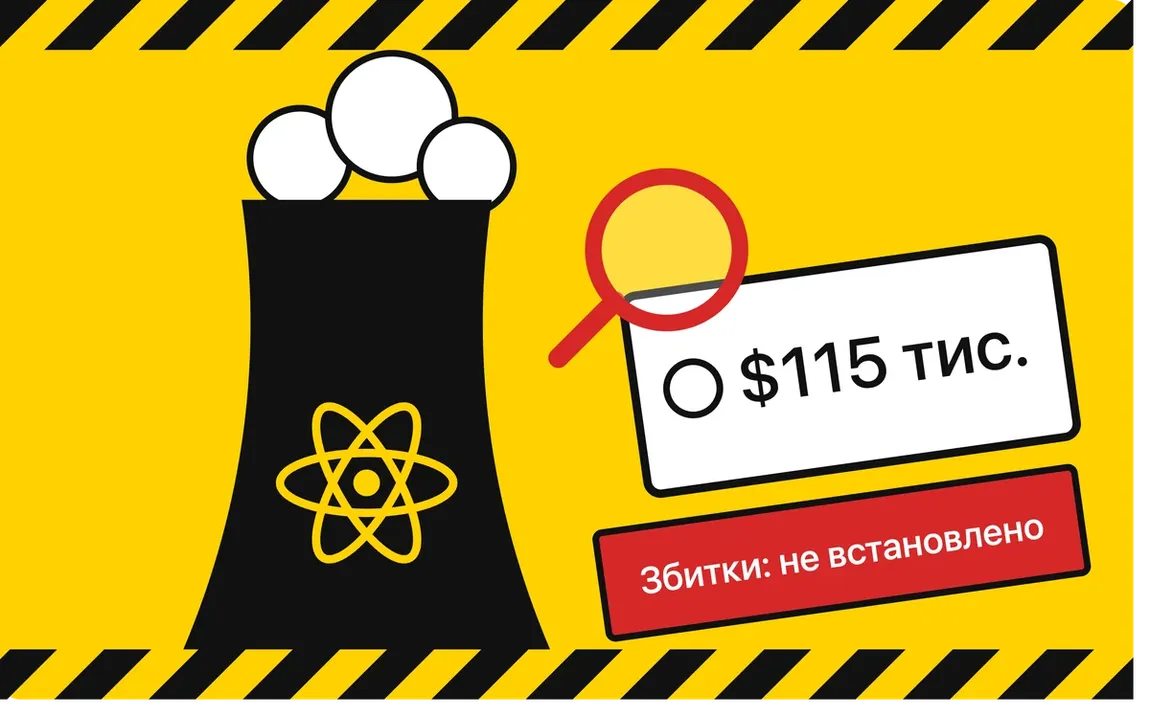
NABU has completed its investigation into the "Midas" case without establishing any losses to Energoatom, and has publicly named bribes of only $115,000. Within a year the energy minister, the company's management and the balance of power on the electricity market have all changed, and critics of the Bureau consider this the main result of the case.
A year ago the "Midas" case was presented as the biggest corruption scheme in the history of Ukrainian energy. Now that the investigation is over, it has no Energoatom as a victim and no established losses, writes Stanislav Bronevytskyi.
Bronevytskyi worked as a prosecutor at the Specialized Anti-Corruption Prosecutor's Office. He resigned because he disagreed with a decision by SAP head Oleksandr Klymenko in one of the cases, and now works as a lawyer. He has long criticised the leadership of NABU and SAP publicly, including at sessions of the Verkhovna Rada's temporary investigative commission, so his assessments should be read with that in mind. He built his post around a column by the journalist Serhii Lyamets and advises everyone following the case to read it. The column appeared in a section where the editors separately warn that they may not share the author's views.
Both authors ask the same question. If NABU has failed to prove embezzlement after a year of investigation, what exactly did the "Midas" case change? Both answer that a verdict may never come, but the main result has already been achieved, because the people who make decisions and distribute money in the energy sector have changed. To test this version, three things need to be examined. What is actually left in the case. Who runs the sector now. Who profited from the changes.
What was promised and what lies in the volumes
On 10 November 2025, NABU carried out more than 70 searches and announced it had exposed a criminal organisation that, according to the investigation, controlled Energoatom's procurement. The participants in the scheme, which the detectives called the "boom gate", allegedly took from 10% to 15% of the value of contracts from counterparties. The investigation counted among the organisation the businessman Tymur Mindich, former deputy prime minister Oleksii Chernyshov, former energy minister Herman Halushchenko and several employees of the company. The public was shown fragments of 1,000 hours of recordings, and the headlines carried a figure of $100 million.
On 4 November 2026, NABU and SAP completed the pre-trial investigation and opened the case materials to the defence. The case contains about 300 volumes of documents. The documentation lasted more than 15 months, starting in the summer of 2024, and drew on data from more than 15 countries. According to the investigation, through a separate "back office" of the group more than $111 million and €12 million in cash passed in 2020-2025, and the money was laundered through cryptocurrency, securities and a foreign investment fund. Assets have been seized in Ukraine and abroad. Some of the episodes have been split off into separate proceedings, where, NABU reports, bribes in the energy sector and money laundering will continue to be investigated.
The investigation describes the money in detail but names no victim. In reply to one request, NABU wrote outright that the pre-trial investigation had not established any losses to NNEGC Energoatom. There are no losses to the state either in the ruling of the High Anti-Corruption Court of 25 August 2026 in case No. 991/10706/26. At a briefing on the results of the half-year, NABU director Semen Kryvonos confirmed that Energoatom does not have the status of a victim, and did not explain why.
So the company from which, according to the original version, money was being siphoned off has officially lost nothing. Bronevytskyi calls the stories about embezzlement at Energoatom yet another media fabrication.
The investigation answers with a different construction. According to its version, the participants in the scheme extorted bribes from suppliers, and then laundered the money received. A bribe really may cause no direct loss to a company, because the supplier pays it out of his own pocket. But such a version needs people who paid. The lawyers Rostyslav Kravets and Yevhen Solodko pointed out that not a single Energoatom counterparty has reported extortion. Bronevytskyi writes even more harshly: nobody has admitted at all to giving anyone an improper benefit.
Hence the main legal question of the case. Under criminal law, money laundering exists only together with a predicate offence, that is, the crime that generated the money. Bronevytskyi put it this way: "If Energoatom has suffered no losses, then what is the predicate offence?" Until the investigation answers this question, the charge of laundering $111 million rests on the assumption that the money is criminal, although, according to Bronevytskyi, the case contains no direct evidence of this.
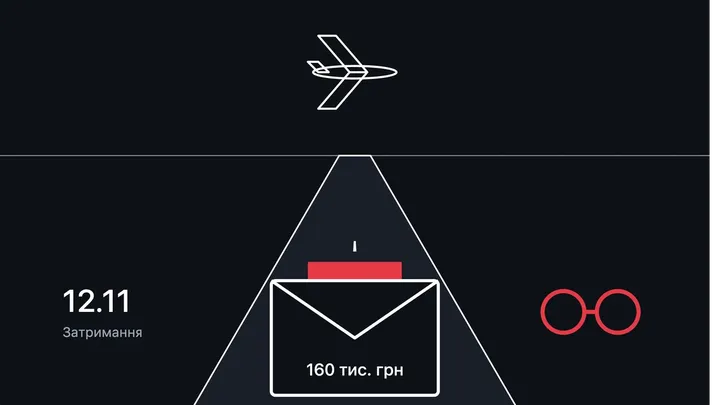
There are only 2 publicly known specific episodes of receiving an improper benefit. Kryvonos spoke about them in February. The first concerns $53,000 allegedly handed over in May 2025 in the interests of Elast Atom LLC. The second concerns $62,000 that, according to the investigation, was handed over in October 2025 by a person acting in the interests of TDV "BZ Rema". This person asked for help in getting Energoatom to repay its debt to the enterprise.
Together that is $115,000, or roughly 0.1% of the sum the investigation considers laundered. Bronevytskyi adds that the case has still not established who passed this money to whom and how. According to him, it was received by people who did not make management decisions in the company, and after that the trail is lost. Lyamets suggests that the 300 volumes may contain more episodes. In that case, however, it is unclear why NABU, which spent the whole year readily talking about the case, did not name them publicly.
Bronevytskyi also lists other failures of the investigation, in his view. Mindich and another figure in the case, Oleksandr Tsukerman, managed to leave Ukraine before the searches. Andrii Synyuk, a former deputy head of SAP who was checked over a possible leak of information in the case, resigned of his own accord in November 2025. Synyuk himself denies any involvement in the leak. Bronevytskyi believes that NABU and SAP "forgave" Synyuk and misled the Rada's temporary investigative commission. The origin of the money of Mindich, Tsukerman and other figures in the case, he writes, has still not been established, although the funds have already been called criminal.
Why a verdict may come only in 2032
The investigation was completed 6 days before the deadline set by law. Next the defence studies the materials, and by Lyamets's estimate 300 volumes and 1,000 hours of recordings will take almost a year. So at best the trial will begin at the end of 2027.
How long the trial itself will last is suggested by the statistics of the High Anti-Corruption Court. An average case there takes more than 500 days, and complex ones drag on for 5-6 years. If "Midas" goes the same way, a verdict will appear in 2032-2033, when hardly anyone will care about the case any more.
There is also a mundane explanation. The case is large, there are many figures in it, some of them are abroad, so nobody expected a quick trial. Lyamets, however, recalls 2 more figures. Over 7 years of work the HACC has handed down 34 acquittals out of 431 verdicts in the first instance, that is 7.9%, whereas across all courts in Ukraine the share of acquittals is about 1%. Transparency International counted dozens of cases that were closed because time limits ran out. Lyamets explains this by saying that evidence was lacking and the cases were dragged out until they could be written off under the "Lozovyi amendments", that is, the norms that limit the duration of pre-trial investigation. He asks outright whether such delay does not point to a weak evidence base, and whether the same ending is expected in "Midas".
While the trial has not begun, NABU is expanding the case with new episodes. Detectives have announced suspicions against officials who, according to the investigation, helped to pay a 150 million hryvnia bail (about $3.3 million) for one of the key figures. In July 2026, Dmytro Basov, the former Energoatom executive director for physical protection and security, received a new suspicion of laundering more than 30 million hryvnias (about $660,000). Herman Halushchenko's bail of 150 million hryvnias is now being transferred to the Asset Recovery and Management Agency, and, as Lyamets writes, it may lie there until the verdict, that is, those same 5-6 years.
Whom the case has already removed
The verdict is far off, but the personnel consequences of the case came at once. Herman Halushchenko, who at the time of the operation was justice minister, resigned in November 2025 together with energy minister Svitlana Hrynchuk. Mindich stayed abroad. Chernyshov was by then no longer in the government.
The purge reached Energoatom too. On NABU's recommendation, the government suspended several mid-level managers who had worked under Petro Kotin. They were not formally dismissed, only suspended for the duration of the check, but they never returned to their posts. As of November 2026, only one of them, Dmytro Basov, has the status of a suspect. The rest, according to Lyamets's sources, are witnesses or have no status in the case at all. Lyamets notes that these people lost their jobs as if a court had already found them guilty, and that whatever the court decides later will change nothing for them.
Kotin himself left the company back in August 2025, 3 months before the operation. His duties were temporarily performed by Pavlo Kovtoniuk, general director of the Rivne nuclear power plant. On 22 September 2026, the supervisory board suspended him too. Officially the board explained this by a loss of trust in Kovtoniuk's ability to carry out its decisions. According to Lyamets's sources, the board demanded that an expensive consultant be hired, Kovtoniuk refused, and after that he was removed. Oleksandr Ostapovets, who ran the Zaporizhzhia nuclear power plant until 2019, temporarily headed the company.
The supervisory board had chosen a permanent head back on 20 September. Out of 78 candidates, the winner was the head of Ukrgasvydobuvannya, Yurii Tkachuk, and the former head of the Rivne nuclear power plant, Pavlo Pavlyshyn, was chosen as director for nuclear safety. Lyamets writes that Tkachuk has neither a nuclear education nor the certificate for such a post, so the charter was changed to suit him and, for the first time in the company's history, the leadership was split into 2 posts. He also calls Tkachuk a man of prime minister Serhii Koretskyi.
2 months have passed, and Tkachuk has still not taken up the post. Officially the candidates are still going through regulatory and corporate procedures. Lyamets's sources claim that the appointment is being blocked by the first deputy prime minister and energy minister Denys Shmyhal, while publicly the minister does not comment on the subject. According to Lyamets, the prime minister and the minister have been competing for control of the company for almost a year. This cannot be verified from open documents. One fact, however, does not depend on versions: the country's largest generating company has entered the winter without a permanent head.
The stakes in this struggle are visible in the figures. Nuclear power plants produce more than 60% of electricity in Ukraine. Energoatom's revenue under Kotin grew from 45.7 billion hryvnias in 2020, when the company had a loss of 4.9 billion hryvnias, to 254.7 billion hryvnias in 2025 with a profit of 18.7 billion hryvnias. At the 2025 exchange rate that is about $6 billion in revenue and $450 million in profit. By sales volume the company is second in Ukraine, behind only the energy trader from Rinat Akhmetov's DTEK group.
Big money means big procurement, because nuclear power units require expensive maintenance. After "Midas", journalists wrote that the fireproofing of cables for Energoatom had risen in dollar terms by 16% in a year, and that the company had ordered containers for nuclear waste for $175 million and hidden the prices behind commercial secrecy. The procurement around which the case flared up has not gone anywhere. Only the people who decide on it have changed.
Bronevytskyi goes further than Lyamets here. He claims that appointments in the sector now take place with the approval of the heads of NABU and SAP, whom he calls the "collective Klymonos", and refers to talk on the market. He offers no documentary confirmation of this.
Who made money on the electricity market
Lyamets suggests asking the question that is usually asked first in cases like this: who won? His hypothesis is that the change of leadership at the Ministry of Energy and at Energoatom benefited, above all, energy traders, that is, companies that buy electricity from producers and resell it. They trade nuclear power most of all, because the country has more of it than anything else.
The most detailed account of this story comes from Andrii Herus, chair of the Rada's energy committee. On 5 November he sent Prime Minister Serhii Koretskyi a letter with three demands: dismiss the management of Energoatom-Trading, terminate the contracts from the 27 October auction, and conduct an inspection.
According to Herus, a closed meeting took place at the Ministry of Energy on 26 October. It discussed two decisions that could raise the price of electricity: higher price bids from Energoatom on the day-ahead market and opening electricity exports during daytime hours. Among those present, Herus says, was a representative of D.Trading from the DTEK group, while other private buyers and state traders were not invited.
The next day Energoatom sold 480,000 MWh at an auction at an average price of UAH 5,313.78 (about $117) per megawatt-hour. D.Trading bought 315 MW, although over the previous 10 days it had bought only 45 MW. The same day Energoatom submitted all its bids to the day-ahead market at much higher prices. The auction ended at about 13:02, and the results of trading on the day-ahead market, which showed a price increase, became public at about 13:40. On 28 October the BASE index rose by 82.8%. This index shows the average price of electricity for the next day across all hours, meaning it almost doubled in a single day.
Herus believes all this looks like the use of insider information and estimates the revenue Energoatom failed to receive at UAH 1.8 billion (about $40 million). This is a calculation, not a proven loss, and it covers all the volumes at the auction, which were bought by 69 companies, not only by D.Trading. The company replied that its share at the auction was 15.7% and that, since the beginning of 2026, Energoatom's electricity has made up only 3% of its purchases. On 9 November the National Energy and Utilities Regulatory Commission (NEURC) announced that it was studying the circumstances of the auction.
Herus draws a parallel with the auction of 14 January 2026, when a large sale by Energoatom likewise preceded a sharp price rise. Then, according to Lyamets, D.Trading may have known in advance about the increase in price caps on the market, and Shmyhal played the leading role in that story. DTEK agreed to voluntarily pay Energoatom UAH 164 million (about $3.6 million) and terminated 9 contracts for 1 GW ahead of schedule. However, on 27 May the NEURC announced that it had found no signs of improper use of insider information at the January auction. So the regulator has already checked the first such episode and saw no violation.
Lyamets cites several more details. In July D.Trading received 200 MW of electricity 14.2% cheaper than other volumes were sold. According to Herus, the company initially controlled 60-65% of demand on the day-ahead market, later about 45%, and together with companies that, in the deputy's view, act in concert, about 60%. Officially, no one has confirmed these figures. Lyamets's sources also claim that after "Mindich-gate" the old team of traders returned to Energoatom's trading arm, the one that Kotin dismissed in his time and that had previously worked in the structure of one of the largest traders. Lyamets himself admits that he cannot verify this.
Each of these facts proves nothing on its own, and Lyamets says so directly. Together they form a hypothesis that the NEURC and possibly the Antimonopoly Committee should check: private traders are earning where state-owned Energoatom used to earn, and the company does not object when it loses money.
A minister who is not criticised
Shmyhal was appointed first deputy prime minister and minister of energy on 14 January 2026, on the second attempt. Over 10 months, Lyamets writes, the way the market works has changed noticeably.
From 7 October the government allowed private gas producers to export up to 15% of their output to the EU, for the first time since the start of the full-scale war. Lyamets writes that the decision was lobbied through by Shmyhal himself, and he sees absurdity in it: the volumes are small, but right now Naftogaz is importing expensive gas at European prices and plans to bring in a billion cubic metres of American liquefied gas. In addition, according to Lyamets, distributed generation, that is, small gas-fired units meant to power cities during outages, was cut off from cheap gas, and operators now do not want to work because it is unprofitable. Lyamets writes that he is sure of Shmyhal's role in this decision but does not know who stands behind the minister himself.
The same applies to cogeneration units, which produce heat and electricity simultaneously. Former Ukrenergo head Volodymyr Kudrytskyi once blamed the people charged in "Midas" for the delays in launching them. Those people have long been gone from the sector, yet the units still have not started working at the required scale. Lyamets asks who is getting in the way now.
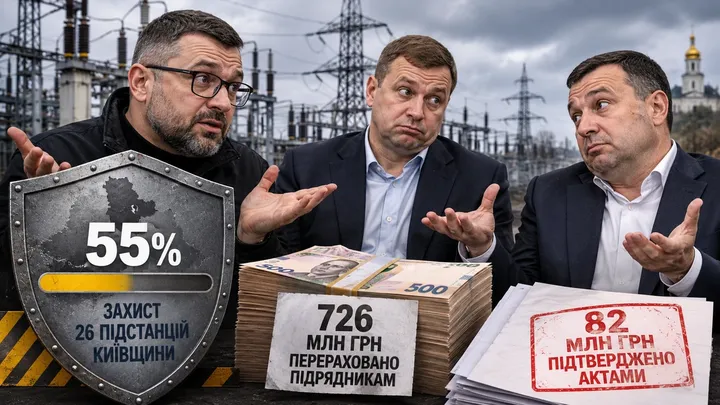
On 21 August 2026 Shmyhal declared in the Verkhovna Rada that the power system was working stably, 15 GW of generating capacity was available, and there were no scheduled outages. Two and a half months later cities sit without power for 16 hours or more, and on 4 November the media discussed outages of up to 20 hours a day. Among other things, the suspects in "Midas" were suspected of blocking the protection of energy facilities during Russian attacks. In a year of new leadership, the protective structures still have not been built. The media place responsibility for this on Kyiv region officials, the former head of the Kyiv region Mykola Kalashnyk and the developer Vladyslav Sokolov, although developers say they did not receive money from the state. The minister of energy does not figure in these stories.
Lyamets compares how the media wrote about the previous minister. In 2022-2025 Halushchenko was criticised systematically and personally: not only for possible corruption but also for weak preparation for Russian strikes, and his resignation was demanded every time people sat without light for several hours. In today's articles about outages Shmyhal appears as an official source: he holds a coordination meeting, demands response algorithms. Lyamets sees no demands for his resignation. He asks whether such media benevolence is not gratitude for the right decisions. He offers no evidence of this, so it remains a question, not a claim.
What follows from this
A year after "Midas", three things are firmly established. NABU itself has acknowledged that no losses to Energoatom have been established and that the company is not a victim. The publicly known bribes amount to $115,000 against the $111 million that the investigation calls laundered, and without a proven predicate crime this gap will become the main line of defence in court. The trial will most likely take years, and a verdict may come when no one cares about the case any more.
At the same time, the case has already done what no verdict will, because it has changed the people. The Ministry of Energy has been headed by Shmyhal since January. Energoatom is run by an interim acting head, and the appointment of the competition winner is stuck. On the market, the head of the Rada's relevant committee for the second time in a year points to a sale of nuclear electricity on the eve of a price spike from which traders benefit.
Whether anyone planned such an outcome cannot be proven from the available documents, and the authors of this version themselves admit it. Still, some answers can be had right now. Who exactly is blocking Tkachuk's appointment? Who was at the Ministry of Energy meeting on 26 October, and did anyone among the buyers know about its decisions? What episodes, besides the two worth $115,000, does NABU have in its 300 volumes? What "Midas" remains in history depends on these answers: a fight against corruption in the energy sector or a convenient way to replace those who control that sector.
Source:Станіслав Броневицький
References:ukranews.comfacebook.comepravda.com.uathepage.uaepravda.com.uaforbes.uakurs.com.uakyivpost.comukrinform.uaforbes.uakmu.gov.uazaxid.netinterfax.com.ua